

A Lesson in Political Discourse from Six-Year-Old Ruby Bridges
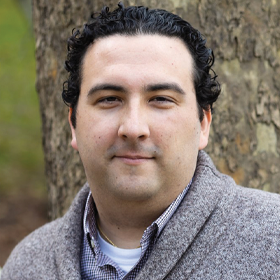
By Michael Wear
In 1986, Robert Coles, a Harvard professor and child psychologist, wrote The Moral Life of Children. In the book, he describes his theories about why children behave the way they do and talks about the id, the ego, and the superego and how they interact with one another. And yet his theories were confounded by one little girl named Ruby Bridges.
At age six, Ruby Bridges was the Black student who initiated school integration at the William Frantz School. The school was integrated as part of the response to the Supreme Court’s decision in Brown v. Board of Education, which was decided in 1954 just months before Ruby’s birth. By 1960, integration was required in Louisiana by a federal court order, but it continued to face intense resistance from both public officials and White citizens.
For months, Ruby was escorted by federal marshals as she made her way to her local public school. For nearly a full school year, she was the sole student at William Frantz, as White families boycotted, refusing to send their children to school with a Black student. Every day, marshals escorted Ruby through a mob of angry people who would curse her, shout racial slurs, and hurl death threats. On Ruby’s second day of school, an adult woman threatened to poison her. On another day, a woman stood along Ruby’s route to school displaying a Black doll in a wooden coffin. Ruby’s family was threatened too.
As the story of what Ruby was doing in Louisiana became better known, Robert Coles traveled to New Orleans to meet her. He wanted to understand how a little girl could do what she was doing, and he was concerned that she would be profoundly psychologically harmed by what she was enduring. Coles spent hours with Ruby, trying to help her, all while he was studying and learning from her.
Ruby Bridges Confounds A Psychiatrist
Coles recounts, “Still, Ruby persisted, and so did her parents.” He writes that Ruby “appeared strong, but she would soon enough show signs of psychological wear and tear.” Coles considered a number of theories for why Ruby was acting in the way she was, theories of “denying” and “reaction formation.”
At one point, though, Coles came upon an interesting bit of information from one of the teachers at the school, who reported on this scene: “I was standing in the classroom, looking out the window, and I saw Ruby coming down the street, with the federal marshals on both sides of her. The crowd was there, shouting, as usual. A woman spat at Ruby but missed, Ruby smiled at her. A man shook his fist at her; Ruby smiled at him. Then she walked up the stairs, and she stopped and turned around and smiled one more time! You know what she told one of the marshals? She told him she prays for those people, the ones in that mob, every night before she goes to sleep!”
Coles had to follow up on this! He had been interested in how Ruby slept as an indicator of her psychological state, but he hadn’t thought to ask about what she did right before she slept. And so he asked her about her prayers. He recounts, “Ruby was cheerful and matter-of-fact, if terse, in her reply: ‘Yes, I do pray for them.’” Coles asked her why, and she replied, “‘Because.’”
He writes, “I waited for more but to no effect. I started over, told her I was curious about why she would want to pray for people who were so unswervingly nasty to her. ‘I go to church,’ she told me, ‘every Sunday, and we’re told to pray for everyone, even the bad people, and so I do.’ She had no more to say on that score.”
Coles continues, “When I finally began to take notice of Ruby’s churchgoing activities, and those of her parents, I’m afraid I was not very responsive to what I heard and saw. I kept wanting to fit what I was learning into what I had already learned ... in order to say yes once more to the psychological theory I’d acquired before going South. Ruby was picking up phrases, admonitions, statements ritually expressed, bits and pieces of sermons emotionally delivered, and using all that in a gesture of obedience. She was being psychologically imitative.... She did what she was told, but did she truly understand what she was doing? Was she not, rather, showing herself to be a particular six-year-old child: scared, vulnerable ... limited cognitively ... grasping at whatever straws came her way?”
Coles continued to press Ruby so he could continue with his analysis. She told him, “They keep coming and saying the bad words, but my momma says they’ll get tired after a while and then they’ll stop coming. They’ll stay home. The minister came to our house and he said the same thing, and not to worry, and I don’t. The minister said God is watching and He won’t forget, because He never does. The minister says if I forgive the people, and smile at them and pray for them, God will keep a good eye on everything and He’ll be our protection.”
Coles thought he sensed doubt in Ruby’s voice, and so he asked her if she believed the minister. She replied, “Oh, yes ... I’m sure God knows what’s happening. He’s got a lot to worry about; but there is bad trouble here, and He can’t help but notice. He may not rush to do anything, not right away. But there will come a day, like you hear in church.”
Coles continued his psychological analysis but couldn’t make much headway with his existing theories.
Ruby Bridges’s Presumption
I’ve had the opportunity to teach several classes of college students about Ruby Bridges’s story. They hear about what Ruby did. They read, even, of Robert Coles coming to terms with Ruby’s own testimony. Yet many of the students insist that what she did is impossible and unthinkable. If Ruby were older, she would have understood that you don’t put yourself in danger’s way like that. If she had been more mature, she would have realized that some people just should not be prayed for, but rather condemned. Six-year-old Ruby said some nice things, the kind of things Christians are supposed to say, but do we treat these “platitudes” as reality? Maybe it would be nice to act that way, but there’s no conceivable way to get there. What she did—it makes no sense. These are the things that students of various faith backgrounds, including Christians, have said.
And yet Ruby Bridges did do those things. She said what she said, and she did what she did. Ruby’s actions, not just the “what” but the “how,” poured forth from her heart and affected everyone around her.
Her family and her church were witnesses to her faithfulness. Her courage to walk through those crowds of hateful people made it possible for other Black boys and girls in her neighborhood and city to attend integrated schools. Across the nation, activists and common, ordinary, everyday folks saw what she was doing and took inspiration from it.
Not everything was solved, of course. Some of those who cursed Ruby likely never repented. Many White families fled to the suburbs rather than place their children in an integrated school. Louisiana continued to put up roadblocks to fair school integration and educational equity. But Ruby made a difference. And not only in her own time, but for ours.
When I think of Ruby Bridges, I think of a Norman Rockwell painting of her titled The Problem We All Live With. The painting depicts little Ruby in a white dress with a bow in her hair, carrying school supplies. She’s marching, surrounded by four federal marshals. On the wall behind her is a graffitied racial epithet and the letters KKK etched into the wall, with the remains of a thrown tomato on the sidewalk alongside the wall.
I think of this painting because when I worked in the White House, the painting was displayed right outside of the Oval Office. I would walk by it on my way to the Roosevelt Room or the Oval. Sometimes if had a moment of quiet, I walked over just to look at it. Others, too, were moved by the painting. If you were going to meet with the president, you might be seated outside of the Oval before it was your turn to go in and you’d look at little Ruby.
Everyone who meets with the president has something burning in their heart that they want to say, that they think is important, but even the boldest can wilt under the pressure. The Oval Office is intimidating. The presidency can be intimidating.
But I know stories of people who, as they felt the pressure, unsure of themselves and their qualifications to do what they had been called to do, what people were counting on them to do, looked at Ruby Bridges and thought, If she could do what she did, certainly I can have the courage to stand for what I believe is right.
Imagine that. The faithfulness of six-year-old Ruby Bridges inspired adults fifty years later who had an audience with the president to advocate for their vision of the public good.
________
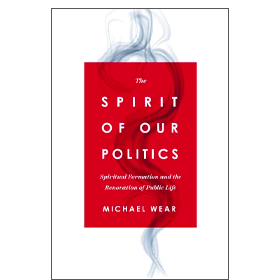 Adapted from The Spirit of Our Politics: Spiritual Formation and the Renovation of Public Life, by Michael Wear. Click here to learn more about his book.
For those discouraged and exhausted by the bitterness and rage in our politics, Michael Wear offers a new paradigm of political involvement rooted in the teachings of Jesus and drawing insights from Dallas Willard's approach to spiritual formation.
When political division shows up not only on the campaign trail but also at our dinner tables, we wonder: Can we be part of a better way? The Spirit of Our Politics says "yes," offering a distinctly Christian approach to politics that results in healing rather than division, kindness rather than hatred, and hope rather than despair.
In this profound and hope-filled book, Michael Wear—a leading thinker and practitioner at the intersection of faith and politics—applies insights taken from the work of Dallas Willard to argue that by focusing on having the "right" politics, we lose sight of the kind of people we are becoming, to destructive results. This paradigm-shifting book reveals:
- Why we need to reframe how we view our political involvement as Christians
- How as Christians we can reorient our politics for the good of others
- The crucial connection between discipleship to Jesus and political involvement
- A different way of talking about politics that is edifying, not stomach-turning
- How to navigate political strife in churches and small groups
- Why who we are in our political life is not quarantined from who we are in "real life"
- Why gentleness is entirely possible in our political discourse
The Spirit of Our Politics is for readers of any political perspective who long for a new way to think about and engage in politics. That new approach begins with a simple question: What kind of person would I like to be?
Michael Wear is the founder, president, and CEO of the Center for Christianity and Public Life, a nonpartisan, nonprofit institution that contends for the credibility of Christian resources in public life, for the public good. For well over a decade, he has served as a trusted resource and advisor for a range of civic and religious leaders on matters of faith and public life, including as a White House and presidential campaign staffer. Previously, Michael founded and led Public Square Strategies, a consulting firm that helps religious and political organizations, businesses, and others navigate the rapidly changing landscape of religion and politics in America.
Michael’s first book, Reclaiming Hope, examines the role of faith in the Obama years and what it means today. He has coauthored or contributed to several other books, including Compassion and Conviction: The AND Campaign’s Guide to Faithful Civic Engagement with Justin Giboney and Chris Butler. His writing has appeared in the Atlantic, the New York Times, the Washington Post, Catapult magazine, Christianity Today, and other publications.
Michael and his wife, Melissa, are both proud natives of Buffalo, New York. They now reside in Maryland, where they are raising their beloved daughters, Saoirse and Ilaria.

