

Extravagant Grace and a Tale of Two Fathers
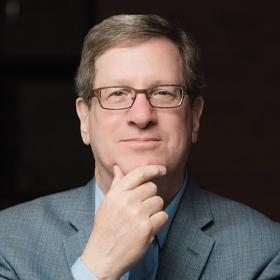
By Lee Strobel
I always wondered: Would I cry when my father died?
After the confrontation in which my dad declared he didn’t have enough love for me to fill his little finger, I stormed out of the house, determined never to return. I lived for two months in a small apartment nearly forty miles away as I worked as a reporter for a small daily newspaper. The publisher agreed to hire me beyond the summer. My future seemed set.
I never heard from my father, but my mother kept urging me to return. She would call and write to tell me my dad certainly couldn’t have meant what he said. Finally, I did come home briefly, but my father and I never discussed the incident that prompted me to leave. I never broached it, and neither did he.
We maintained a civil but distant relationship through the years. He paid for my college tuition, for which I never thanked him. He never wrote, visited, or came to my graduation. When I got married after my sophomore year at the University of Missouri, my parents hosted the reception, but my dad and I never had a heart-to-heart talk.
Fresh from Missouri’s journalism school, I was hired as a general assignment reporter at the Chicago Tribune, later developing an interest in law. I took a leave of absence to study at Yale Law School, planning to return to the Tribune as legal editor.
A few days before my graduation, I settled into a cubicle in the law school’s gothic library and unfolded the New York Times for a leisurely morning of reading. I was already prepared for my final exams and was getting excited about returning to Chicago.
Then my friend Howard appeared. I folded the newspaper and greeted him; he stared at me as if he had something urgent to say but couldn’t find the right words. “What’s wrong?” I asked. He didn’t answer, but somehow I knew. “My father died, right?”
He nodded, then led me to the privacy of a small alcove, where I sobbed inconsolably.
Alone with My Father
Before my father’s wake began at the funeral parlor, I asked for the room to be cleared. I stood in front of the open casket for the longest time. A lifetime of thoughts tumbled through my mind. My emotions churned. There was nothing to say, and yet there was everything to say.
So many times in my life, I had rationalized away my need to take responsibility for the role I had played in our relational breakdown. He’s the one who should be apologizing to me. Or pride got in my way. Why should I go crawling to him? Or sometimes I’d just put it off. I can always handle that later.
Finally, after a long period of silence, I managed to whisper the words I desperately wished I had spoken so many years earlier: “I’m sorry, Dad.”
Sorry for the ways I had rebelled against him, lied to him, and disrespected him over the years. Sorry for my ingratitude. Sorry for the bitterness and rancor I had allowed to poison my heart. For the first time, I admitted my own culpability in our relational strife.
Then came my last words to my father: “I forgive you.” As best I could, I extended him grace — too late for our relationship, but in so many ways liberating and life-changing for me.
Over time, I found that nothing heals like grace.
Unexpected Words
Soon business associates, neighbors, golfing buddies, and others arrived at the wake to offer condolences to my mother and other family members. I sat by myself in a folding chair off to the side. I was dealing with deep and conflicted emotions and didn’t feel like interacting with anyone.
One of my dad’s business associates walked over and sat down beside me. “Are you Lee?” he asked.
“Yes, I am,” I said. We shook hands.
“Well, it’s great to finally meet you after hearing so much about you,” he said. “Your dad could never stop talking about you. He was so proud of you and excited about what you’re doing. Every time you’d have an article in the Tribune, he’d clip it and show it to everyone. When you went off to Yale — well, he was bursting with pride. He was always showing us pictures of your kids. He couldn’t stop bragging about you. It’s good to finally put a face with the name because we heard your name a lot from your dad. ‘Lee’s doing this.’ ‘Lee’s doing that.’ ‘Did you see Lee’s article on the front page?’ But then, I suppose you knew all that.”
My mind reeled as I tried to conceal my astonishment. I couldn’t help wondering what might have been different if those words had come to me directly from my dad.
When I became a follower of Jesus several years later, I saw the stark contrast. Here, there was no concealing how my Father felt about me. In direct declarations, the Bible shouted over and over: God’s love for me is unrestrained and unconditional; his grace is lavish and unending. I am his workmanship and his pride, and he couldn’t stand the thought of spending eternity without me in his family.
And as God’s grace utterly rocked my life — forgiving me, adopting me, and changing my life and my eternity — something else became clear: how tragic it would be to withhold the news of that grace from others. How could I revel in it myself but never pass it along to a world that is dying for it? As atheist Penn Jillette said, “How much do you have to hate somebody to believe that everlasting life is possible and not tell them that?”
“[God] dispenses his goodness not with an eyedropper but a fire hydrant. Your heart is a Dixie cup and his grace is the Mediterranean Sea. You simply can’t contain it all,” said Max Lucado. “So let it bubble over. Spill out. Pour forth. ‘Freely you have received, freely give.’”
Writing about my journey of grace in The Case for Grace has only strengthened my resolve to emulate the apostle Paul. “What matters most to me,” Paul wrote, “is to finish what God started: the job the Master Jesus gave me of letting everyone I meet know all about this incredibly extravagant generosity of God.”
That is the joyful task of every follower of Jesus. Someday may it be written about me on my tombstone: He was so amazed by God’s grace that he couldn’t keep it to himself.
________
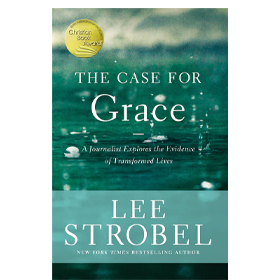 Adapted from The Case for Grace: A Journalist Explores the Evidence of Transformed Lives, by Lee Strobel. Click here to learn more about this award-winning book.
Join investigative journalist and bestselling author Lee Strobel as he embarks on his life-changing quest to solve the riddle of grace. Along the way, you'll find the undeniable evidence of grace in the true stories of racists, addicts, and even murderers who have found new hope and purpose—all through the redemptive power of God's amazing grace.
In The Case for Grace, Lee offers an accessible explanation of the theology of God's grace, shown through the incredible, dramatic, can't-put-it-down stories of people whose lives were changed by the gift of grace—true accounts of people whose transformation and renewal are so radical that they seem to be best explained as the work of a gracious God.
Lee draws upon his own journey from atheism to Christianity to explore the depth and breadth of God's redeeming love for spiritually wayward people, traveling thousands of miles to capture the inspiring stories of everyday people whose values have been radically changed and who have discovered the "how" and "why" behind God's amazing grace.
Each story that Strobel shares in The Case for Grace contributes a piece to the puzzle of grace, showing us:
- How grace goes beyond forgiveness to acceptance and even adoption by God
- How it restores hope when none is left; how it extends to the most heinous circumstances
- How it allows us to forgive those who caused our most intimate wounds—and even to forgive ourselves
Through it all, you will be encouraged as you see how God's grace can revolutionize your life—starting today.
Lee Strobel, former award-winning legal editor of the Chicago Tribune, is a New York Times bestselling author whose books have sold millions of copies worldwide. Lee earned a journalism degree at the University of Missouri and was awarded a Ford Foundation fellowship to study at Yale Law School, where he received a Master of Studies in Law degree. He was a journalist for fourteen years at the Chicago Tribune and other newspapers, winning Illinois’ top honors for investigative reporting (which he shared with a team he led) and public service journalism from United Press International. Lee also taught First Amendment Law at Roosevelt University. A former atheist, he served as a teaching pastor at three of America’s largest churches. Lee and his wife, Leslie, have been married for more than fifty years and live in Texas. Their daughter, Alison, and son, Kyle, are also authors. Lean more about Lee at leestrobel.com.

