

Judging Is a Two-Way Street
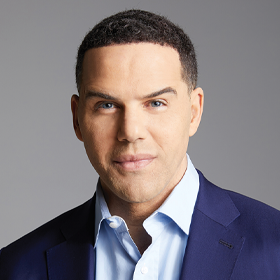
By Steve Pemberton
We’ve all heard the many nuggets of wisdom about judging:
- Judge not, lest ye be judged.
- Don’t judge a book by its cover.
- Don’t judge someone until you have walked a mile in their shoes.
Beyond that wisdom, which many of us heard as children, we have also been on the receiving end of a bad opinion and should therefore know better than to judge. Still, we all pass judgment, in quiet ways and in other ways that are not so quiet.
More recently, a different element has been added to our universe: social media. In that world, everything is open for opinion. The currency on which social media thrives is judgment. Within seconds, we can weigh in with our assessment of someone else, approvingly or disapprovingly, while offering opinions of our own.
This tendency does not make us bad people. It’s simply human nature, our way of trying to organize the world that we are often too busy or impatient to understand. Henry David Thoreau said it well: “The question is not what you look at, but what you see.” And part of what we need to see is that passing judgment is often about something else: us.
We can try to dress up our judgment by saying we only want what’s best for that person, even though we’ve not shared constructive feedback with them. We can assign it to the fact that we live in an overscheduled world and we don’t have time to unpack people and their specific situations. But in the end, judgment says more about us than it does about the person on the receiving end.
Perhaps our need to judge comes because we feel uncertain, afraid, or envious or are stuck in our own lives. We may see others taking risks that we ourselves have not yet summoned the will to take. They may have achieved something we thought we could have—or should have—achieved.
These are difficult reasons to admit, but the honesty is necessary. We should always try to refrain from quick judgment, but when we do judge someone, we should always take a closer look at our own motivations.
Go Below the Waterline
Many of us often assess others by what we see: their gender, race, age, physical appearance, or accent. (On more than one occasion, strangers have rightly guessed that I grew up in Massachusetts. My accent is a dead giveaway even though I can’t hear it.)
Some of these are attributes we come into the world with, and they are mostly things we cannot change, nor do we want to. They exist above the waterline, much like the tip of an iceberg. And like the iceberg, the labels we see are only the beginning of the story, not the end. They are our first picture but not the full story.
To see these physical characteristics makes us observant. But we get ourselves in difficulty when we assume we know someone’s story because of what we initially see. Everyone has a story, and that story is rarely evident simply by looking at them. Yet we live in a world that continually sees the need to render a verdict on our fellow human beings, as if the most important things we can ever learn about someone are those things above the waterline.
These quick appraisals are routinely exploited by scheming advertisers, clickbait promoters, and disingenuous politicians who manipulate these tendencies for their own end. Much of the distrust and separation we see in our societies can be traced back to this behavior. Left unchecked, these snap judgments will be our undoing, and our well-intended attempts to unify, to find some common ground, will fall flat.
Considering everyone we meet a “them” comes at immeasurable cost. The increasingly polarized world of the last several years shows us the price we pay.
There is a deeper, richer, and more unifying narrative. The full story of what unites us is to be found in the things we cannot see: in the music that moves us, the families we love, and the children we adore.
Our more common story is to be found in the way we celebrate our culture or our faith, if we are the first in our family to go to college or have served our country. It can be uncovered when we learn that our grandparents were immigrants, or if we started a small business. As we get to know someone better, to learn their full story, we find that there are more things we have in common.
I learned this firsthand when I met my mother’s family, the Murphys, and learned the story of my grandfather, Joseph Murphy. The son of Irish immigrants, he was born and raised in Philadelphia. In 1918 the flu pandemic descended on the city with great fury, killing twenty thousand people, including Joe’s mother and father, both passing away within a week of each other.
Joe went to live with an uncle and his wife, who did not fully embrace young Joe. His childhood was turbulent and difficult, but he went on to serve the US in World War II, becoming highly decorated in the process. Later on he served as a technical writer for NASA.
In Grandpa Joe’s first picture, he would have appeared to be a spectacled, older white man who doted on his family. His fuller story was something more—an orphaned boy who became a war hero, a member of the Greatest Generation whose early years were eerily similar to mine.
________
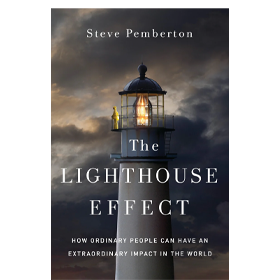 Adapted from The Lighthouse Effect: How Ordinary People Can Have an Extraordinary Impact in the World, by Steve Pemberton. Click here to learn more about his book.
In this stirring follow-up to his memoir, Steve Pemberton gives practical encouragement for how you can be a "human lighthouse" for others and through these inspiring stories will renew your hope for humanity.
Our polarized, divisive culture seems to be without heroes and role models. We are adrift in a dark sea of disillusionment and distrust and we need "human lighthouses" to give us hope and direct us back to the goodness in each other and in our own hearts.
Steve Pemberton found a lighthouse in an ordinary man named John Sykes, his former high school counselor. John gave Steve a safe harbor after Steve escaped an abusive foster home and together they navigated a new path that led to personal and professional success. Through stories of people like John and several others, you will identify how the hardships you have overcome equip you to be a "human lighthouse," inspiring those around you.
The humble gestures of kindness that change the course of our lives can shift the course for America too. With a unique vision for building up individuals and communities and restoring trust, The Lighthouse Effect opens your eyes to those who are quietly heroic. You will reflect on the lighthouses in your own life and be reminded that the greatest heroes are alongside us—and within us.
Steve Pemberton is Chief People Officer for Workhuman, the leading online platform bringing positivity to the workplace through social recognition. Prior to assuming his role at Workhuman, Steve was a Senior Human Resources Executive at Walgreens. Steve and his wife, Tonya, are the proud parents of three children.

