

When Politics Becomes Poisonous

By Nancy French
When I arrived home, I noticed a business card taped to my mailbox fluttering in the wind like a butterfly’s wing.
I took it off, annoyed at whatever roofing company was trying to drum up business, and thumbed through my mail. But the card had a raised golden seal with five words printed beneath it: the Federal Bureau of Investigation.
“Contact me at your earliest convenience.” The note on the back was written in slanted printed letters. “Urgent.”
My chest tightened as I dialed my husband.
“The FBI?” David was on a business trip, and his voice sounded distant now. “What did the agent say when you called him?”
“You think I called him back?” I’d never been contacted by the FBI, but it seemed like an opening to a movie, the kind in which the unsuspecting woman ends up in a gas station bathroom cutting her hair with a knife and dyeing it with shoe polish hoping for a clean slate in Topeka.
“Did you rob a bank?” His voice was teasing, laced with impatient incredulity. “If not, call them.”
“Does the FBI typically come to a person’s house?” I asked.
“I don’t know. Call him back, before it gets too late.” It was already dark. “Whatever this is, it’s not good.”
I dialed the number.
“Thank you for calling, Mrs. French.” The agent’s formality caused my throat to thicken. “Are you familiar with the Cesar Sayoc case?”
Of course. Every news channel had been covering it around the clock for the past few weeks. In the days leading up to 2018’s midterm elections, Sayoc sent prominent Democrats pipe bombs in a wave of attacks. Fear of political violence spread across the nation.
When the news first broke, I’d been on a job. I’m a ghost, but not the scary kind. The writer kind. Almost all celebrity books are written by ghostwriters like me, unknown writers who learn the minutiae of their celebrity clients’ lives and toil in obscurity to meet tight deadlines. But it’s true. Most famous people don’t have the time, skill, or inclination to write a book while starring in a television show, running for office, or training for the Olympics. That’s where I come in. I sit down, hear their stories, and go to their homes, studios, movie sets, weddings, or Olympic training centers and create books that will be in stores in twelve to eighteen months.
When Sayoc mailed his first pipe bombs, I was with a client in a hotel lobby. The television news anchor on a nearby TV described how the bomber had targeted Bill and Hillary Clinton, Joe Biden, several members of Congress, Barack Obama, George Soros, and Robert De Niro.
The other hotel guests and I got closer to the screen, which showed images of a cylindrical object wrapped in electrical tape, wires emerging from both ends. Black ISIS-like flags were taped to them, as well as photos of the recipients with a red X marked across their faces.
Days after the first attack, the FBI identified this domestic terrorist as a stockily built Florida man who lived in a van covered with pro-Trump posters. The feds found binders full of media clippings, photo collages of people’s faces, and writings that said, in a 180-degree twist on the words of Christ, “Kill your enemy.”
He’d taken his cues from every serial-killer documentary ever made.
“I saw it on the news,” I said to the FBI agent. “But what does any of this have to do with me?”
“We found your address on Sayoc’s computer.” He paused. “Your husband was on his list.”
How Did We End Up Here?
David and I were doing what we’d always done: speaking out about our values, values which had not changed. But as the political climate shifted, we suddenly were at odds with our own community. Either you were with the GOP, or you weren’t.
We’d been ostracized because we refused to support a president who made a cameo in the Playboy film Playmate 2000 Bernaola Twins. We’d been confronted at church because we didn’t support a man who’d admitted to groping women. And now we’d been targeted by a domestic terrorist.
I sat at my kitchen table, my hands shaking. Someone had to point out that the emperor—not just the Bernaola Twins—had no clothes. But at what cost? Not only was I forced out of my tribe, I’d lost my main source of income. My political clients wanted a ghostwriter to write what they told them to write. That’s the job. I was supposed to reflect their views for their books, not write my own.
Not only did I write their books, I traveled with them, wrote speeches, and even sat at Fox News headquarters to sharpen their talking points. I specialized in witty insults, clever turns of phrase, and political statements aimed to provoke liberals. Combativeness was part of the fun, delivered with a wink. People would argue during the day and have a drink together in the evening. But the wink was gone, replaced by mean tweets. Acrimony had settled into our brows, and people from different political parties actually loathed each other.
I tried to continue my political work but vowed not to twist the truth or bear false witness against my liberal neighbors. Because I lived in Franklin, Tennessee, I didn’t have many actual liberal neighbors, but you get the idea. I wouldn’t mischaracterize liberal positions, I wouldn’t make generalizations about an entire group based on the craziest outliers, and I wouldn’t assume the worst of every Democrat. Hadn’t my own approach to politics contributed to the problem? Couldn’t we all agree things had gone too far?
Though my political clients had previously respected my opinion and enjoyed our back-and-forth dialogue, they now resented my questioning their talking points and softening their forceful rhetoric. I soon quit, or was fired by, all of them.
That put me in a financially precarious situation. Now I was in a physically precarious one. I clutched the FBI agent’s business card. Since my multiracial family had taken a stance against Trump, we’d been mocked by Republicans, targeted by White nationalists, threatened with death, and alienated from our church community.
But the American story is one of defiance, especially of the political kind. My unwillingness to bow the knee to an unsuitable president was the most American thing I’d ever done. And the ensuing rupture allowed me to see my nation and fellow Americans in new, more accurate, and ultimately more meaningful ways.
I quit the GOP, which means I am no longer bound to toe the party line. Now I’m liberated from all expectations and can reveal what really happened.
That’s what I’m doing now. Instead of writing for others, I’m telling my own story. As a ghost, invisible to the people around me, I’m coming out and making myself known. After floating along the outskirts of the powerful while our nation has digressed into unbelievable hatred, I’ve got a story to tell. It’s not tidy, nor is it easy, and it’s more than a little frightening.
All good ghost stories are.
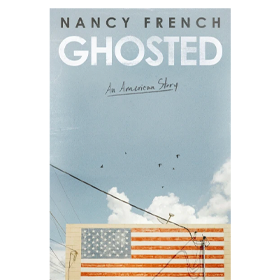
Adapted from Ghosted: An American Story, by Nancy French. Click here to learn more about his book.
A riveting look inside a life of poverty, success, and the inner circles of political influence—from the foothills of Appalachia all the way to the White House.
New York Times bestselling ghostwriter Nancy French is coming out of the shadows to tell her own incredible story.
Nancy’s family hails from the foothills of the Appalachians, where life was dominated by coal mining, violence, abuse, and poverty. Longing for an adventure, she married a stranger, moved to New York, and dropped out of college. In spite of her lack of education, she found success as a ghostwriter for conservative political leaders. However, when she was unwilling to endorse an unsuitable president, her allies turned on her and she found herself spiritually adrift, politically confused, and occupationally unemployable.
Republicans mocked her, white nationalists targeted her, and her church community alienated her. But in spite of death threats, sexual humiliation, and political ostracization, she learned the importance of finding her own voice—and that the people she thought were her enemies could be her closest friends.
A poignant and engrossing memoir filled with humor and personal insights, Ghosted is a deeply American story of change, loss, and ultimately love.
Nancy French is a five-time New York Times bestselling author. Her most recent is her personal memoir, Ghosted: An American Story. As a ghostwriter, she has written for a variety of people, from Republican politicians to reality TV stars. As an award-winning investigative journalist, she uncovered sexual and spiritual abuse in America’s largest Christian camp.

